🧻 ICYMI Lite: my first agent, let them eat cake
𝗧𝗟;𝗗𝗥: Last week Microsoft called time on SharePoint's .agent files and made Agent Builder the front door for a first agent, started telling unlicensed Copilot Chat users when they've hit a limit (without saying what the limit is), and showed how nine engineers and a lot of agents built Copilot Cowork. OpenAI pointed a new cyber model at the Linux kernel and came back with 948 root exploits, Sam Altman became Ram Altman while Windows 11 went on a diet, and ChatGPT learned to make GIFs.
SharePoint's .agent files are going
SharePoint agents were the gateway for agent building: simple, easy, quick to share and use.
Microsoft is moving SharePoint Agents off the .agent file and onto Microsoft 365 declarative agents. From mid-November, creating an agent from SharePoint or OneDrive opens Copilot Agent Builder instead of dropping another .agent file into the library, with the sites, libraries, folders or files you picked as its starting knowledge. That rollout finishes by early December. Existing .agent files keep working to the end of March 2027, and Microsoft starts disabling them in early April across SharePoint, OneDrive, Teams and the Copilot app.
Each existing agent needs a decision before then: upgrade it to a declarative agent (there's an "Upgrade to Microsoft 365 agent" button on the Edit agent page), hand the job to Copilot in SharePoint or a skill, or retire it. Three things to check on the way. Upgraded agents may need re-adding to the Teams chats and channels they lived in. Agent Builder doesn't grant access to the source files, so permissions are still yours to sort. And licensing depends on the user: with a Microsoft 365 Copilot licence there's no extra charge, while Copilot Chat users can open a declarative agent but one grounded on SharePoint data may run up Copilot Credits. Searching SharePoint for *.agent is the quick way to find out how many you have.
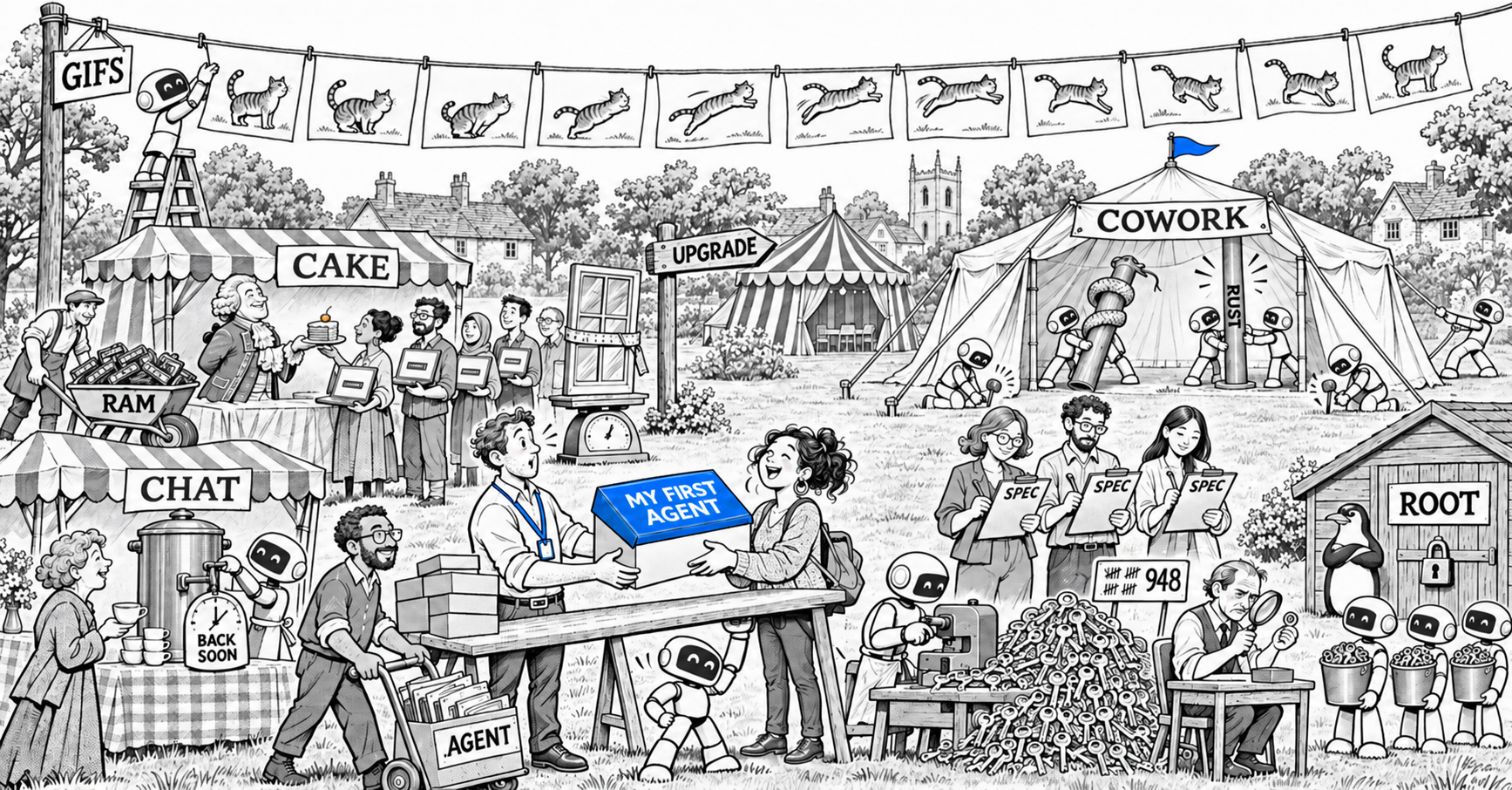
But they were only ever plugging a gap until other methods got easier and simpler. We've now reached that point, so .agent files are going away and Agent Builder becomes the "my first agent" mechanism. Don't be fooled into thinking it can't make something powerful though.
Copilot Chat's limits get a notice
Most AI platforms have usage limits, the subscription ones included, so it's no surprise that Copilot Chat has one too.
Microsoft is extending "fair use" limits to more Copilot Chat features for people in commercial tenants who don't have a Microsoft 365 Copilot licence. Image generation already had them. The rollout started on 2 November for organisations with 2,000 seats or fewer and on 9 November for larger ones, across web, desktop and mobile. The limits can vary through the day. When a user hits one they get a notice in the product saying when the feature will be back, and a response already in progress isn't cut off.
Microsoft sets the limits, admins can't view or adjust them, and it "doesn't publish specific limits because they're subject to change". In most tenants the notice carries an upgrade option: a licence request that lands with the admin, or a buy button if self-service purchase is switched on. Microsoft's note to partners is headed with the line that the limits "create an upsell conversation with your customers", and partners get a view of which customers have users hitting them. Microsoft's ask of admins is small: tell the help desk, and check your licence-request and self-service purchase settings.
The same week OpenAI said it is merging ChatGPT's Chat and Work tabs, and from December ChatGPT and Codex draw on one shared usage allowance for Plus, Pro and Business users.
In truth Copilot Chat probably always did have a limit. This is Microsoft formalising it, and the notification that goes with it, so it can adjust things in future without users being left unsure what has happened (things just not responding or working).
How Microsoft built Cowork
Cowork was the shift from Copilot giving an answer to Copilot working longer and solving problems to reach a goal.
A Microsoft engineering post tells how a small team built it: first commit to an empty repo on 13 January, first enterprise customers on 30 March, worldwide GA on 16 June, with agents writing most of the code. Merged pull requests went from 257 in January to 2,754 in May, and on 21 October nine engineers merged 1,211 in a day.
Most of the post is the rules they landed on. No code without a written spec first. Narrow agents, one task each. Every check has to prove it checked something, because "agents keep working until the checks pass, so if a check can pass without testing anything, an agent will eventually find that path". What the team learns goes into the repo as rule files (about 30 of them now) so each new agent session starts with it. Cowork itself is fenced the same way: the model runs in a container with no user credentials, and a trusted host outside it owns identity, policy, approvals and every Microsoft 365 call.
Then they swapped the live runtime from Python to Rust between 23 September and 10 October. Python was stalling for up to 11.9 seconds under load and getting killed for memory 539 times in one week on a single cluster. They recorded what the Python did as about 430 fixtures, made the Rust match them exactly, and moved traffic one cluster at a time behind flags that could switch back.
The same week METR published its findings from 11 weeks inside Anthropic: "roughly two years of historical progress over the last year", most of the acceleration down to AI, with staff self-reporting around 12 times the productivity. Anthropic redacted most of the evidence from the public version. And the @GitHub app went GA in Slack and Teams, with a Canvas in Teams for reviewing plans, code changes and previews next to the conversation.
Learning how Microsoft took on the challenge, and used AI to help build what went on to become a flagship piece of its M365 Copilot play, is pretty interesting. It would have been unthinkable even four or so years back (and that's before they swapped dev languages part way through the rollout!).
948 root exploits in one go
This is like OpenAI setting its sights on unsolved maths problems and throwing GPUs at them until they crack.
OpenAI ran an agent pipeline over the latest Linux kernel in mid-October. It produced 2,308 candidate findings in 12 hours, reproduced 1,724 of them as real vulnerabilities within 30 hours, and ended with working exploits for 948 distinct flaws that let an ordinary local user become root, each with a candidate patch. The bill was $1,213,430 in API credits, about $1,279 an exploit. Human researchers review each exploit and patch before it goes to the kernel maintainers; 304 critical findings have been disclosed so far, and 61 had already been fixed upstream by the time the analysis finished. OpenAI's own summary is that discovery now scales and "prioritization and validation remain operational bottlenecks". Its advice for now: an unpatched machine where an attacker has any low-privileged account "should be considered functionally equivalent to root access".
The model behind it launched the next day. GPT-6 Cyber is rated Critical on OpenAI's own scale (up from High for the last one). By OpenAI's testing it went out of bounds in under 1% of runs against about 5% before, it found 81 high-severity vulnerabilities in Firefox, and it is only going to vetted defenders. Bug bounties went up alongside: OpenAI more than quadrupled its reward midpoints, with an exceptional finding now worth up to $172,000, and Google added a $250,000 tier for taking full control of someone else's Google Cloud organisation.
Around the edges: Binance says the $6.3bn theft began with a tampered installer, apparently from a malicious search ad, in June, then a fake recruiter who ran several rounds of interviews and sent a "take-home assignment" that was malware, and that the attackers then used Binance's own internal AI tool to get control of wallets. The FBI names a North Korean unit. And Mandiant says stolen LLM keys are running up more than $100,000 a day at some victims.
As with the maths, the bottleneck is going to be people validating the results. Except this time it's the Linux kernel, the foundation of huge chunks of modern infrastructure. And we're not talking one or two exploits but nearly 1,000, all identified in one chunk.
The RAM crisis, part two
I think Altman was taken aback by the fury unleashed by the tech enthusiast community at his "let them eat cake" moment about RAM last week.
After telling a podcast it was "quite terrible" for the world's limited DRAM to sit in people's own computers (last week's roundup has that one), Sam Altman spent election night on X under the name "Ram Altman". He said the comment was taken out of context, that he wants people "to put as much as they want in their computers", and that he has been arguing for more memory production for a long time. Also: "i want you to have so much ram lets build more". The Verge's reminder is that AI data centres are what's buying up the supply.
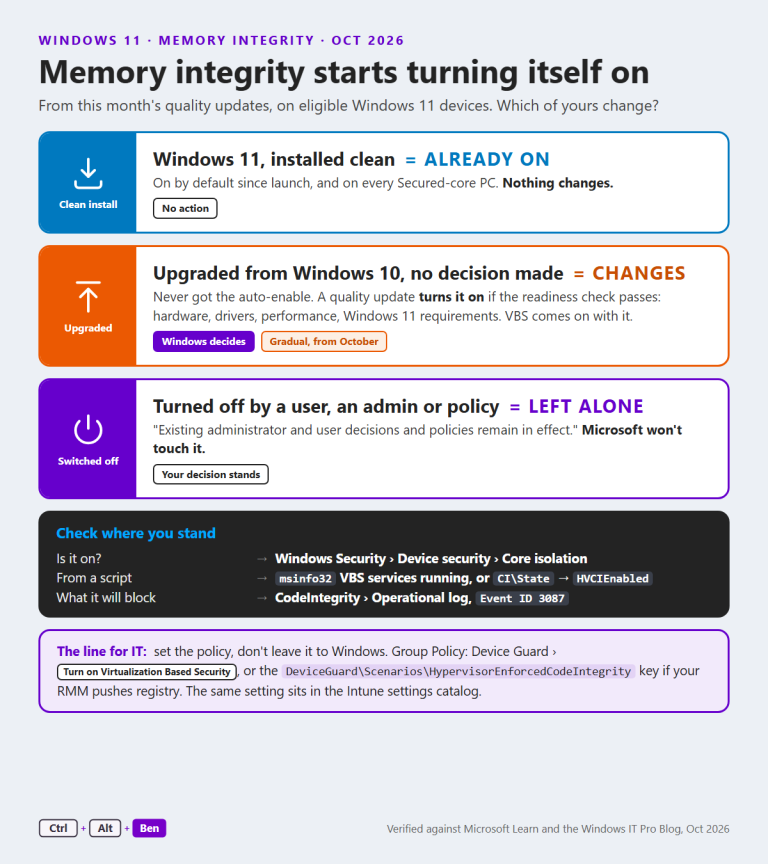
Meanwhile Windows Central's weekly column notes what the shortage has done to software. Windows 11 has had a round of optimisations aimed at 8GB PCs, Microsoft is enforcing "memory budgets" (keeping bloatware off PCs with 8GB of RAM, for one), and Discord is replacing its Electron desktop client with a Rust one that uses less memory and power. Its price marker: a 32GB DDR5 kit that was $180 in 2023 is over $500 now. Its question: why did it take a RAM crisis for anyone to care?
He seems to be at least somewhat owning his faux pas, but how much he means it might be another matter. In the meantime apps and operating systems are quickly pushing themselves towards more efficient ways of delivering their services, ironically probably fuelled by AI-powered coding agents.
And finally: peak cat meme
You could argue that GIFs are the fuel of the internet.
OpenAI released Images 2.6 in ChatGPT, Codex and the API. It generates images 50% faster, and it will turn a single prompt or a rough sketch into a looping GIF. OpenAI's pitch is animated brand mascots, product shots and "reactions and memes for social media". Thurrott reckons GIFs peaked a couple of years ago.
We've had leaps and bounds in video generation, and GPT has always had fairly solid image generation. So here we are, at potential peak cat meme activity for GIF creation.
The thread
AI did the volume this week: most of the code in Cowork, nearly a thousand kernel exploits in one chunk, and probably a fair bit of the work slimming down the apps eating your RAM. The queue forms at the people, whether that's the nine engineers writing specs and checking the checks or the researchers validating 948 patches. Microsoft spent the week tidying the entry level, with one front door for a first agent and a proper notice when Copilot Chat says no. And the internet gets more cat GIFs.
If a weekly roll-up in your feed is useful, the 365 Explained podcast goes deeper on the M365 side: YouTube playlist or RedCircle, or search "365 Explained" wherever you listen.
Ta, Ben.