Configuring Lync Mobility – Part 1

by Ben Lee | Dec 10, 2011 | Fixes | 5 comments

So the time has come for official Lync mobile (MCX) support to be unleashed (well kinda, technically its in two days time) & it looks like there needs to be some architectural changes to make it all work. It’s nothing too challenging but there are one or two design decisions that need to be made & at first glance the official documentation is a bit complex… Hopefully I’ve managed to simplify things here & cover over the basic install in a step-by-step way.

Update – Part 2, Part 3, Part 4

My environment is as follows: a Single Enterprise Edition Front-End server, a single Edge Server in the DMZ and an ISA server acting as a proxy. Because this is a very small scale deployment there is no Director in use…

Overview of changes

  • Add two new DNS records – one internal, one external
    • Either A records or C-Names
  • Patch everything to Lync RTM CU4
  • Define the “Internal ports” used for mobile clients
  • Install mobility bits on Front-Ends & Directors
    • Enable Dynamic compression in IIS
  • Re-request certificates to support new mobile DNS names
  • Configure your reverse proxy
  • Configure push notifications
  • Test! (Kinda)

DNS

Internal DNS

Add a new record to your internal DNS for “Lyncdiscoverinternal.<sipdomain>

This should either be a Cname that resolves to the internal FQDN of your Pool or Director server, or an A record pointing directly to the IP of your director or Pool (NLB IP if your using more than one enterprise server).

I’m going to use an A record to reduce the hops needed for name resolution & because I’m using an internal certificate server so it’s not any hardship (or expense) for me to generate a new certificate containing the new mobility record.

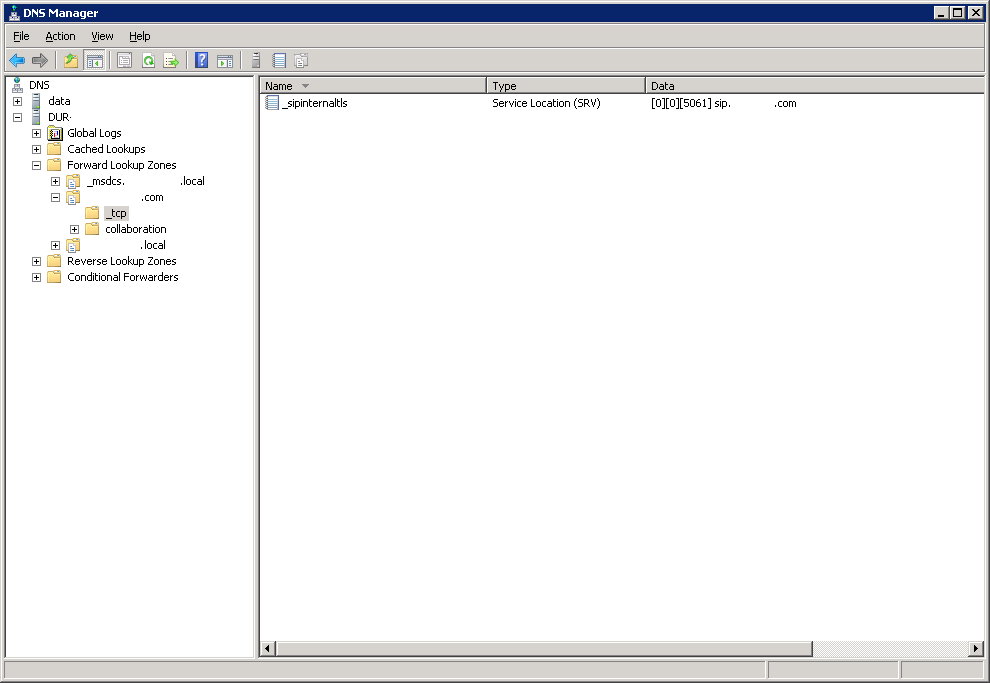
Open your DNS server up & expand out the zone for your SIP domain (your probably using split DNS as this is liekly to be your internet facing DNS name rather than your internal domain name).
clip_image001

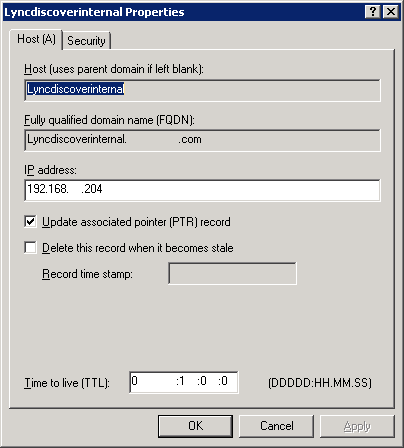
Here is my discovery record used by Lync client that resolves to sip.domain.com

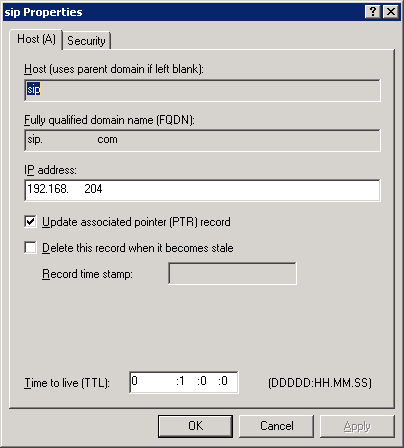
Sip.domain.com in turn resolves to 192.168.10.204. That’s the IP we want to use for our new record
image

Create the new record

image

External DNS

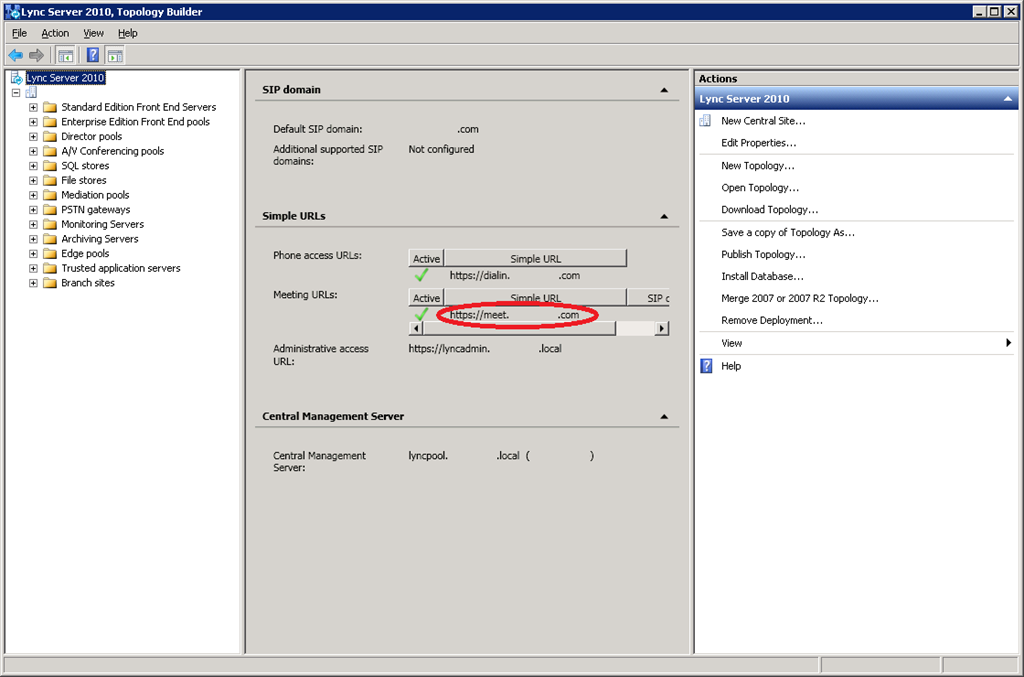
Find the external IP of your reverse proxy by opening Topology Builder and going to the top level and looking at what you have set as your meeting URL
clip_image004

Chances are that whatever IP you have this resolving to will be the IP of your reverse proxy (if it’s not then you obviously know what your doing so can figure it out 😉 )

clip_image005

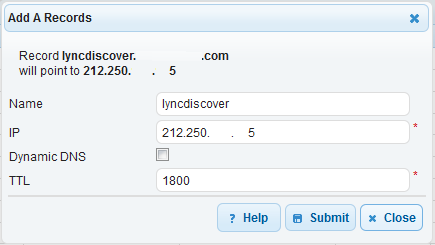
Create your new record

clip_image006Continue to Part 2…

ICYMI Lite, every Monday.

Tagged
Ben Lee

Ben Lee

Ben Lee is a Microsoft MVP and MCT who has been wrangling Microsoft 365 for longer than he would like to admit. By day he is a Head Nerd at N-able. Everything here is his own opinion.

Related

ICYMI Lite: 2–8 November 2026

ICYMI Lite: 2–8 November 2026

🧻 ICYMI Lite: my first agent, let them eat cake 𝗧𝗟;𝗗𝗥: Last week Microsoft called time on SharePoint's .agent files and made Agent Builder the front door for a first agent, started telling unlicensed Copilot Chat users when they've hit a limit (without saying what the...

ICYMI Lite: 26 October–1 November 2026

ICYMI Lite: 26 October–1 November 2026

🧻 ICYMI Lite: one harness, hold on to your hats 𝗧𝗟;𝗗𝗥: Last week Microsoft gave its agent harness one name, took it to Foundry and put a Decision API in front of Work IQ, started winding down Azure Communication Services, and offered 60,000 people the door in the same...

Agent Builder or Copilot Studio? Building agents in Microsoft 365

Agent Builder or Copilot Studio? Building agents in Microsoft 365

Agent Builder or Copilot Studio: where should you actually build an agent in Microsoft 365, and do you even need an agent, or was it a flow all along? In episode fifteen of 365 Explained, Ben and Zach finally deliver the agents episode we promised back in the Power Automate one, from building an agent in Agent Builder to a tour of Copilot Studio and its harnesses.

The Microsoft Authenticator AuthMask flaw: what to check

An interesting write-up this last week on a flaw in Microsoft's Authenticator app. Don't worry (well, not a lot), a fix was pushed in July, and thanks to responsible disclosure we're only now getting the full detail. Enclave's AuthMask research showed that a malicious...

ICYMI Lite: 19–25 October 2026

ICYMI Lite: 19–25 October 2026

🧻 ICYMI Lite: defaults, smoke alarms and PHP 𝗧𝗟;𝗗𝗥: Last week GitHub started switching on Copilot defaults for admins who never picked, Teams put itself into Efficiency Mode on 8 GB laptops, OpenAI's own coding agents turned off the monitoring that watches them and...

Windows Update certificates are rotating in 2027

PSA: if you use Windows Update to patch your machines directly, be aware that Microsoft is rotating out the certificates behind it on 17 May and 19 June 2027. To keep connecting after those dates, your devices need to have installed the September 2025 security update...

ICYMI Lite: 12–18 October 2026

ICYMI Lite: 12–18 October 2026

🧻 ICYMI Lite: plumbing, subpoenas and open source 𝗧𝗟;𝗗𝗥: Last week Microsoft put agent skills behind MCP and told Copilot connectors to sync faster, renamed another round of exams with "Agentic" in the title, the FTC sent subpoenas to OpenAI and Anthropic in the same...

Robots in the therapist's office: IT pro troubleshooting in the age of AI

IT pro troubleshooting in the age of AI

Once upon a time, the IT pro troubleshooting toolkit was things like Regedit, command-line tooling, plumbing the depths of .ini files, watching process traces and capturing network logs. These days, with AI, it feels a bit more like you need to have a good grounding...

ICYMI Lite: 5–11 October 2026

ICYMI Lite: 5–11 October 2026

🧻 ICYMI Lite: Windows goes local, agents go off-piste 𝗧𝗟;𝗗𝗥: Last week Microsoft built Windows around models that run on the laptop and put an Nvidia price tag on the hardware to match, Anthropic's own agents filed a fake murder tip and got their internet taken away...